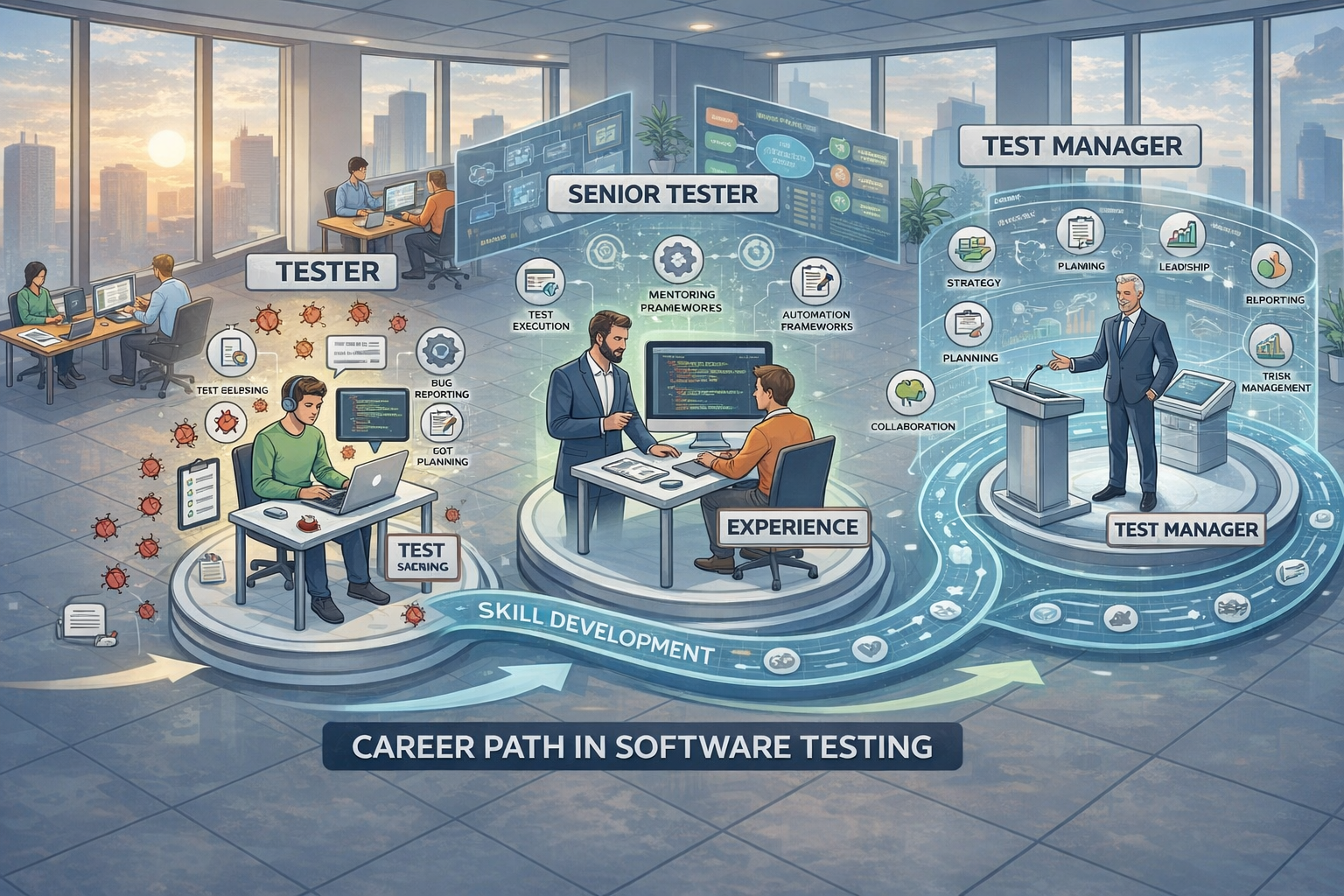
The Foundation: Why Manual Testers Make the Best Managers
Manual testing is sometimes dismissed as an "entry-level job." That is a fatal misconception. Those who have spent years putting applications through their paces develop skills you won’t learn in any management seminar:
• User Empathy: Manual testers know exactly where software "hurts."
• Risk Instinct: They can literally smell which components are hiding the bugs.
• Perseverance: Anyone who has executed 100 manual test cases knows the true meaning of discipline.
The Turning Point: A Shift in Perspective
The transition to management happens in the mind. You stop asking, "How do I find this bug?" and start asking, "How do I optimize the process to catch bugs as early as possible?"
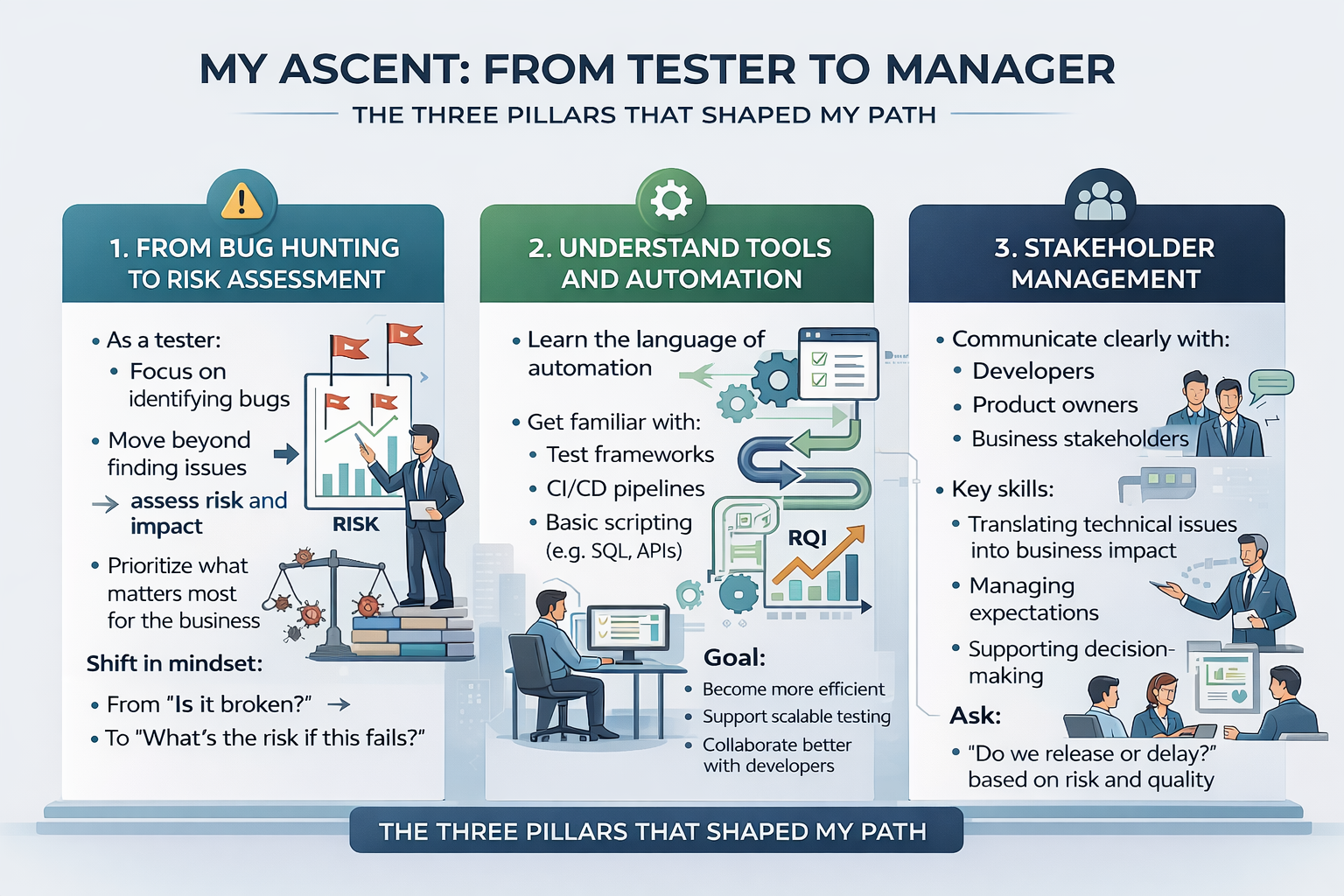
Here are the three pillars that shaped my growth:
1. From Bug Hunting to Risk Assessment: As a manager, you realize you never have time for 100% coverage. I had to learn to make risk-based decisions. We invest our resources where the impact is highest.
2. Mastering the Tools: I didn’t need to become a full-stack dev, but I had to learn the language of automation. Deciding whether a regression belongs in a Groovy script (QF-Test) or requires manual exploration is key to a high ROI.
3. Stakeholder Management: You become the bridge between Devs, Product Owners, and Leadership. You provide the data for the ultimate question: "Is our release at risk?"
The Greatest Challenge: Letting Go
The hardest part? Transitioning from "doing" to "enabling."
• Trusting the team to shine while you provide the framework.
• Removing obstacles instead of checking every single test case.
• Measuring success not by bugs found, but by the team's efficiency and motivation.
Mentoring: Paying it Forward
Today, I support our testers in their development toward becoming ISTQB Test Managers. We focus on:
• Exam Prep: Mastering the ISTQB hurdles with confidence.
• Strategic Thinking: Moving from operational execution to decision-making.
• Practical Risk Management: Identifying and preventing process failures early.
Conclusion: A Journey with Purpose
Moving from manual testing to management isn’t a farewell to Quality Assurance, it’s an expansion of your horizon. You aren't just sitting in the boat anymore; you are the one navigating it.
To all the manual testers out there: Your ground-level knowledge is pure gold.
Use it! Your Fathallah Embarek