There is a comfortable assumption spreading through technology organizations right now. AI writes the code faster, the tests get generated alongside it, and the pipeline catches what slips through. Quality assurance, the thinking goes, is increasingly handled.

That assumption is wrong. And the organizations that discover it too late will do so in the worst possible way.
The Illusion of Automated Trust
When a developer writes code, there is a human being who understands — imperfectly, incompletely, but genuinely — what that code is supposed to do. When something breaks, there is someone who can reason about why.
AI doesn't reason. It predicts. It produces output that is syntactically clean, structurally confident, and occasionally wrong in ways that resist detection precisely because nothing looks wrong. The code reads well. The comments explain the logic. And the tests generated alongside it share the same blind spots as the implementation — because they come from the same model, trained on the same patterns, optimized for the same happy path.
This is not a testing problem. It is an accountability problem.
Where Accountability Goes When AI Writes the Code
In traditional software development, accountability was imperfect but traceable. A developer wrote a function. A reviewer approved it. A QA engineer verified it. When something failed in production, you could ask who made which decision and why.
Agentic development disrupts that chain without replacing it. Code gets generated, reviewed at speed, merged into pipelines that run automatically, and deployed into systems that nobody fully understands anymore. The velocity is real. The value is real. And somewhere in that velocity, the answer to "who is responsible for what this system does?" becomes genuinely unclear.
That ambiguity is not a technical debt problem. It is a governance problem. And it lands on the desk of every leader who has signed off on AI-accelerated development without building the structures to match.
The Question Your Organization Cannot Currently Answer
Here is a test worth running in your next leadership meeting. Ask: "If our AI-built system makes a consequential error tomorrow — one that affects a customer, triggers a regulator, or causes a material failure — who in this organization answers for it?"
Not who fixes the code. Who answers for the decision to ship it.
[Likely] Most organizations cannot answer that question cleanly. Not because people are avoiding responsibility, but because the structures for assigning it were never built. The development process accelerated. The accountability framework did not.
This is the gap. And it is widening faster than most organizations realize.
A New Mental Model for Quality in the AI Era
Quality assurance was never really about finding bugs. It was about building warranted confidence — the kind that lets an organization say, with evidence, that a system does what it claims to do, for the people who depend on it, under conditions they will actually encounter.
That purpose hasn't changed. What has changed is the surface area.
When AI generates code iteratively, in small increments, the discipline of quality has to live inside each iteration — not at the end of a sprint, not in a scheduled test cycle, but in the moment of generation itself. Before prompting an agent, a team needs a clear mental image of what success looks like. Not technically. Not syntactically. In terms of real outcomes for real users. That image is what you validate against. Without it, you will accept whatever the agent produces, because it will always look plausible.
This is not a new principle. It is how experienced engineers approach exploratory testing. What is new is the urgency. At AI speed, the gap between intent and output can compound across hundreds of iterations before anyone notices the drift.
The Competitive Advantage Nobody Is Talking About
There is an opportunity here that most organizations are missing because they are focused on what AI can generate rather than what it can obscure.
The organizations that build explicit accountability structures for AI-generated systems now — defining who owns what, what evidence is required before deployment, and how failures get traced and fixed — will hold a structural advantage over those that don't. Not just in risk management. In the trust they can credibly extend to customers, regulators, and partners.
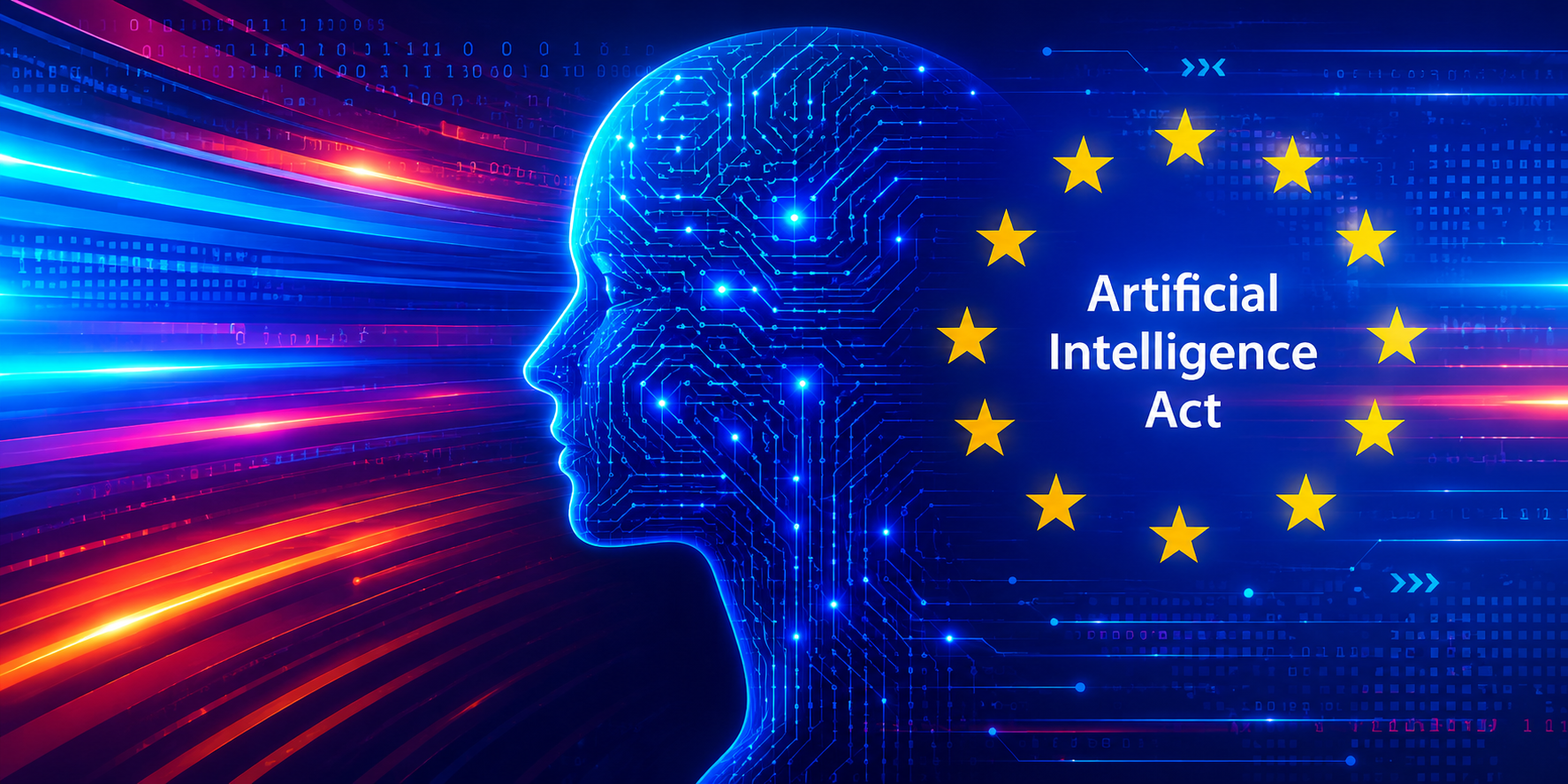
That trust is becoming a commercial asset. The EU AI Act is one signal. The increasing scrutiny on AI systems in healthcare, finance, and critical infrastructure is another. But the deeper signal is simpler: organizations that can explain what their AI systems do, and demonstrate accountability for the outcomes, will earn relationships that others cannot.
[Certain] Regulators are not slowing down their AI-specific requirements. They are adding to them. The question is not whether accountability structures will be required. It is whether you build them before or after something goes wrong.
What This Means in Practice
Accountability for AI-generated systems requires three things that most development processes currently lack:
Ownership that follows the output. The person or team who prompted the AI is responsible for what it produced. That responsibility doesn't transfer because the authorship was algorithmic. It needs to be explicit, documented, and non-negotiable.
Validation against intent, not just behavior. Testing that AI-generated code works is necessary but not sufficient. The harder question is whether it does the right thing — for the right users, under the right conditions, with the right safeguards. That question requires human judgment, not just automated gates.
A feedback structure that learns. When AI-generated systems fail, those failures need to travel back into the development process — not just as bug fixes, but as updated intent, refined guidelines, and stronger accountability checkpoints. The loop has to close.
The Question Worth Asking Now
AI is not making quality assurance obsolete. It is making it harder to skip.
The organizations that understand this are not slowing down their AI adoption. They are building the trust infrastructure that makes that adoption sustainable — the structures, the ownership, the validation discipline that lets them say, with confidence, that what they are shipping can be stood behind.
The ones that don't are moving fast toward a reckoning they haven't planned for.
So: do you know who in your organization answers when your AI-built system fails?
If the answer isn't immediate and unambiguous, that is where to start.
.jpg)